
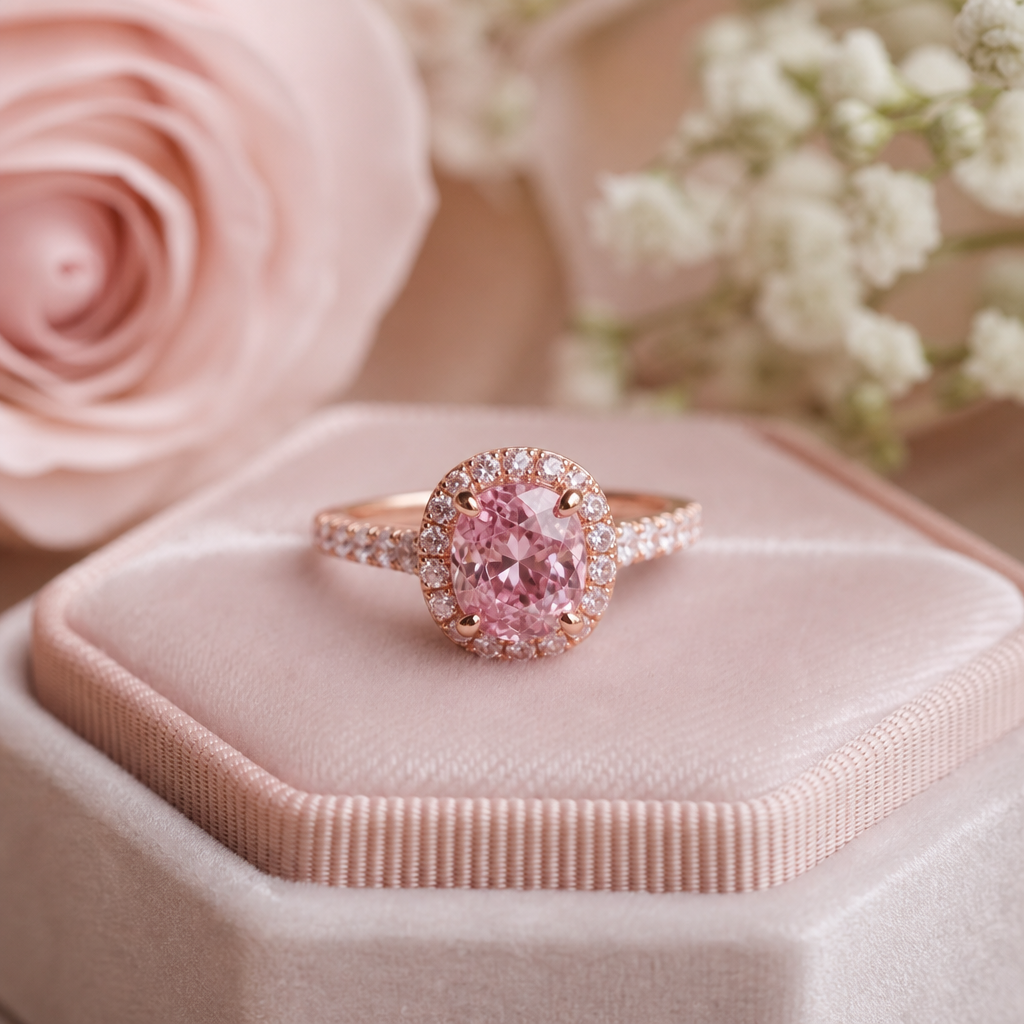
Few gemstones in the world carry the emotional weight and visual splendor of a pink diamond. Coveted by collectors, worn by royalty, and increasingly sought after by couples who want something beyond the ordinary, pink diamonds occupy a singular place in the world of fine jewelry. Their rarity alone sets them apart — but it is the depth of their color, the warmth of their glow, and the story behind each stone that makes them truly unforgettable. For those considering an engagement ring that transcends convention, a pink diamond is not merely a choice — it is a declaration.
The Rarity That Makes Pink Diamonds So Extraordinary
To understand why pink diamonds command such reverence, one must first appreciate how exceptionally rare they are. Unlike colorless diamonds, which form through a relatively straightforward process of carbon crystallization under intense heat and pressure, pink diamonds owe their color to a structural anomaly that scientists have studied for decades. The leading theory suggests that the pink hue results from plastic deformation — a distortion in the crystal lattice that occurs as the diamond travels from deep within the earth to the surface. This process alters the way the stone absorbs light, producing that distinctive rosy tone.
The Argyle mine in Western Australia, which closed in 2020, was historically responsible for producing over 90 percent of the world’s pink diamonds. Its closure has only intensified the scarcity of these stones, driving values upward and making existing pink diamonds even more precious. For buyers entering the market today, understanding this context is essential — a pink diamond engagement ring is not just a piece of jewelry, it is a finite treasure.
Understanding Color Grading in Pink Diamonds
How the Four Cs Apply Differently to Colored Stones
When evaluating any diamond, the Four Cs — cut, color, clarity, and carat weight — serve as the foundational framework. However, for colored diamonds like pink stones, the hierarchy of these criteria shifts considerably. Color becomes the dominant factor, evaluated not just by hue but also by saturation and tone. A vivid pink diamond with minor inclusions will typically outvalue a flawless stone with a pale, washed-out color. This is a nuance that many buyers overlook when first entering the colored diamond market. For a deeper understanding of how these grading principles apply across all diamond types, exploring the science behind diamond brilliance and the Four Cs provides valuable context that can sharpen your purchasing decisions.
The Spectrum of Pink: From Blush to Vivid
Pink diamonds are not a monolithic category. They span a wide spectrum, from the softest blush tones that barely whisper their color to deeply saturated vivid pinks that command immediate attention. The Gemological Institute of America grades fancy colored diamonds using descriptors such as Faint, Very Light, Light, Fancy Light, Fancy, Fancy Intense, Fancy Vivid, Fancy Deep, and Fancy Dark. Each step up the saturation ladder corresponds to a significant increase in rarity and value. Secondary hues — such as purplish-pink, brownish-pink, or orangy-pink — also influence desirability, with pure pink and purplish-pink tones generally considered the most sought-after.
Choosing the Right Setting for a Pink Diamond
The setting of a pink diamond engagement ring is not merely an aesthetic decision — it is a strategic one. The metal surrounding the stone can either enhance or diminish the perceived intensity of the diamond’s color. Rose gold, with its warm copper undertones, is a natural companion for pink diamonds, amplifying the rosy hue and creating a harmonious visual effect. White gold and platinum, by contrast, offer a cooler backdrop that can make the pink appear more vivid and distinct against the neutral metal. Yellow gold, while less commonly paired with pink diamonds, can lend a vintage warmth that suits certain stone tones beautifully.
Beyond metal choice, the cut of the diamond plays a critical role in how color is distributed across the stone. Radiant cuts and cushion cuts are particularly popular for pink diamonds because their faceting patterns tend to concentrate and intensify color. Round brilliant cuts, while maximizing light return, can sometimes dilute the saturation of a colored stone. Working with a knowledgeable jeweler who understands the interplay between cut and color is essential when selecting a pink diamond engagement ring.
The Emotional Resonance of a Pink Diamond
Beyond the technical specifications, there is an undeniable emotional dimension to choosing a pink diamond for an engagement ring. The color pink has long been associated with romance, tenderness, and affection — qualities that align naturally with the meaning of an engagement. But more than symbolism, a pink diamond communicates intentionality. It tells a story of someone who looked beyond the conventional and chose something that required effort, knowledge, and a genuine desire to find the extraordinary. That narrative becomes part of the ring’s identity, carried forward through generations.
For those who want to explore the full range of reasons why pink diamonds make such compelling engagement ring choices, the GIA’s expert perspective on pink diamond engagement rings offers authoritative insight into both the gemological and sentimental dimensions of these remarkable stones.
Leon Diamond: Craftsmanship Meets Rarity
When it comes to sourcing and crafting exceptional diamond jewelry, few names carry the weight of experience and artistry that defines this space. Leon Diamond has built a reputation grounded in the belief that every engagement ring should be as unique as the relationship it represents. With access to an exceptional selection of diamonds and a commitment to bespoke craftsmanship, the brand serves clients who understand that quality is not a compromise — it is a starting point. Whether you are drawn to the quiet elegance of a blush pink stone or the commanding presence of a vivid pink diamond, working with a jeweler of this caliber ensures that every detail, from stone selection to final setting, reflects the highest standards of the craft.
Investment Value and Long-Term Significance
Pink diamonds have demonstrated remarkable resilience as investment assets, particularly in the wake of the Argyle mine’s closure. Auction records have been repeatedly broken by pink diamonds of exceptional quality, with stones fetching prices that rival the world’s most valuable artworks. While the primary motivation for purchasing a pink diamond engagement ring should always be personal and emotional, the financial dimension is worth acknowledging. Unlike many luxury purchases that depreciate over time, a high-quality pink diamond tends to hold or increase its value — making it a gift that gives in more ways than one.
Conclusion: A Choice That Speaks Without Words
Choosing a pink diamond engagement ring is an act of deliberate beauty. It requires research, patience, and a willingness to look beyond the familiar. But for those who make that journey, the reward is a piece of jewelry that carries meaning on multiple levels — gemological, emotional, and historical. In a world where so much is mass-produced and interchangeable, a pink diamond stands apart as something genuinely irreplaceable. It is a stone that has traveled billions of years and thousands of miles to arrive at this singular moment, set in a ring that will mark the beginning of a lifetime together. That is not just jewelry. That is legacy.