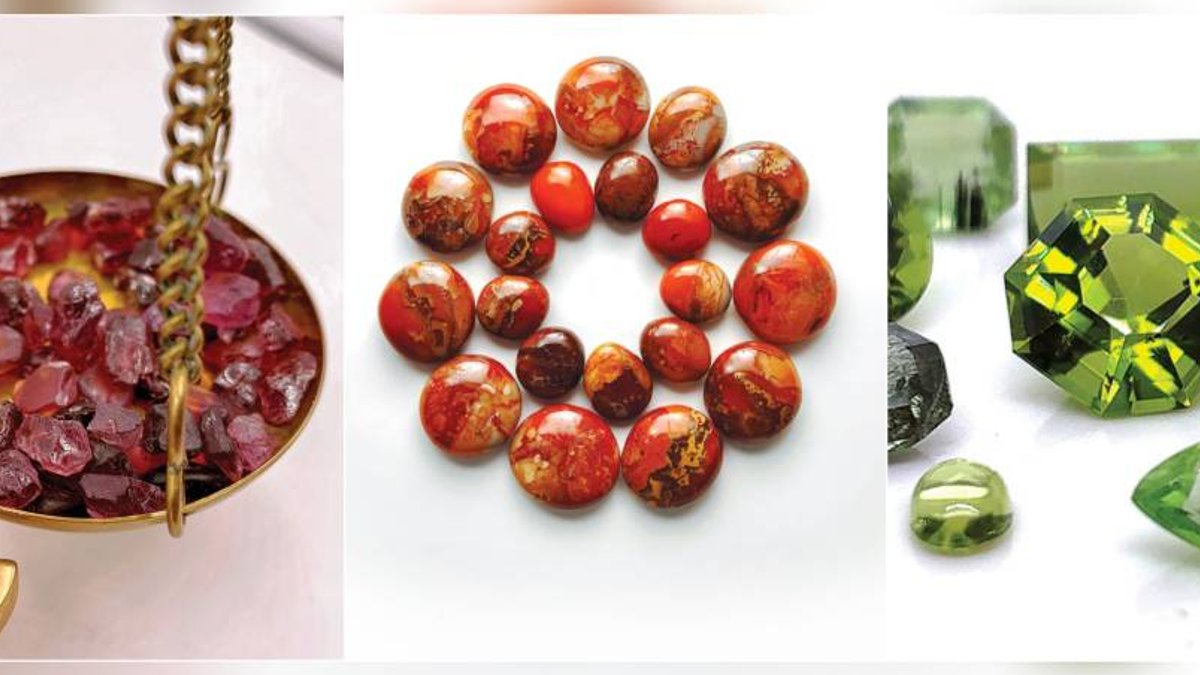
August’s birthstones hold significance beyond their decorative appeal. While most months feature two or three traditional gems, August distinguishes itself with a long-standing tradition that recently expanded. For centuries, the month was associated with a single stone in both American and European customs. In 2016, however, a third gemstone joined the official list, giving August three birthstones instead of one.
The most recognizable is peridot, a semi-precious form of olivine distinguished by its rich olive-green to yellowish tones. Ancient Egyptians revered it as the “gemstone of the sun,” believing it provided protection and good fortune. With a hardness of 6.5 to 7 on the Mohs scale, peridot is sturdy enough for jewelry but vulnerable to chemical exposure and heat. Its double refraction—a visual effect visible under magnification—makes identification straightforward.
The stone’s green hue aligns with summer’s vitality, though its symbolic connections remain somewhat ambiguous. The National Association of Jewelers, now known as Jewelers of America, designated peridot as August’s primary birthstone in the U.S. Unlike many gemstones, peridot undergoes minimal treatment; heat can damage it, and while rough stones may receive oiling for clarity, most commercial offerings remain natural. Prices increase significantly at three carats or more, as large, flawless specimens are rare. A notable exception exists in Pallasite meteorites, where peridot’s celestial origins create a link to space.
Major peridot sources include China, the U.S., Myanmar, Egypt, and Pakistan. Its accessibility, until size and clarity drive up costs, has maintained its popularity for jewelry and gift-giving.
Read Also: Why platinum stays the gold standard for luxury
August’s Historical Roots: The Stone Before Peridot
Before peridot gained prominence, sardonyx served as August’s sole birthstone, particularly in Europe. This layered chalcedony variety, part of the quartz family alongside amethyst and onyx, displays alternating bands of reddish-brown sard and white chalcedony, creating patterns ranging from deep red to orange. Ancient Greeks and Romans carved it into seals and cameos, valuing its durability and carving precision.
With a hardness of 7 on the Mohs scale, sardonyx resists daily wear, making it ideal for rings and pendants. Treatments are limited to dyeing for enhanced color contrast or heating to darken bands, but the stone itself remains untreated. While modern sardonyx is affordable, antique or handcrafted cameos hold collector’s value. Historical mining locations include India, Brazil, Uruguay, Germany, and Madagascar.
It is believed to be one of the original gemstones associated with the breastplate of Aaron, which is believed to be the first artifact used to depict the birthstones. Its layered structure and historical use in signet rings have cemented its place in jewelry history.
Unlike peridot, sardonyx never lost its appeal outside Europe. In the U.S., it remains a specialized choice, overshadowed by peridot’s vivid allure.
A Contemporary Addition: The Gemstone Mistaken for Ruby
The newest August birthstone, spinel, was officially recognized in 2016, though its story extends centuries back. Jewelers of America formalized its status a decade earlier, but confusion with ruby dates to the 16th century. Myanmar traders first noted spinel’s differences, yet the deception persisted. The Black Prince’s Ruby in the British Crown Jewels is actually a spinel, though the museum retains its original label. The name comes from Latin “spina,” meaning arrow, because of the arrow-like shape of the rough (double pyramids or octahedra).
Read Also: GTA jewellers hit in overnight smash-and-grab spree
With a hardness of 8, spinel is highly durable, heat-resistant, and chemically stable. Its colors span pale orange to deep red, cobalt blue, pink, gray, and even black, rivaling ruby and sapphire in intensity. Key mining regions today include Sri Lanka, Afghanistan, Myanmar, Tanzania, Madagascar, and Vietnam.
Spinel’s late inclusion as a birthstone reflects its long-overlooked status in jewelry circles. Its durability and vivid hues now position it as a strong alternative alongside peridot and sardonyx.
Industry Insights: How Birthstones Are Selected
The assignment of birthstones follows a centuries-old pattern linking gems to months based on perceived qualities. Religious texts, such as the biblical breastplate of Aaron, serve as early influences, though modern assignments blend tradition with market trends. Jewelers of America and similar groups now act as authorities, updating lists to include stones like spinel that gain traction. This evolution keeps birthstones relevant by balancing historical roots with contemporary preferences.
The origins of August’s birthstones span the globe, each tied to specific mining regions.


